
Alphabet Soup: Explaining Acronyms of a New Era in Aviation Law

From IFR to ADS-B, ATIS to NOTAMs, and even the occasional squawk of “VFR flight following,” aviation is its own language, inclusive of countless abbreviations and specialized language that can sound like alphabet soup to the uninitiated. Yet for aviators and aviation lawyers alike, these clusters of letters form a grammar of precision: each stands for an entire regulatory regime, procedural requirement, or safety philosophy. The field’s most recent additions—MOSAIC and BVLOS—represent a profound transformation in how aviation is being regulated (and in some cases, less regulated), and in how the law itself is adapting to new technologies in both general aviation and unmanned aircraft systems (i.e., UAS or drones).
MOSAIC
The Federal Aviation Administration (“FAA”) recently finalized its Modernization of Special Airworthiness Certification (“MOSAIC”) rule. Finalized in July 2025, it represents the first comprehensive overhaul of small-aircraft regulation in two decades. See Modernization of Special Airworthiness Certification (MOSAIC) Final Rule, 90 Fed. Reg. 45,117 (July 18, 2025).
The rule is the culmination of a multiyear collaboration between the FAA, manufacturers, and pilot organizations such as the Aircraft Owners and Pilots Association (“AOPA”) and the Experimental Aircraft Association (“EAA”). Its purpose is to modernize how light aircraft are certified and how pilots are qualified to fly them.
For nearly twenty years, the sport-pilot certificate and light-sport aircraft definitions have been linked together under a single rule. That framework was intended to simplify entry-level aviation, but it quickly grew outdated. It relied on a fixed maximum takeoff weight—1,320 pounds—that excluded many technologically advanced aircraft. MOSAIC separates the two categories and replaces weight with stall speed—a direct measure of how slowly an airplane can fly safely—as the key criterion. Aircraft that meet this performance-based threshold can now qualify for the light-sport airplane category (“LSA”), even if they are larger or more capable than before. The change brings certain four-seat airplanes and new designs, including helicopters, gyroplanes, and electric vertical-takeoff-and-landing (“eVTOL”) aircraft, within reach of certification.
MOSAIC also broadens the privileges of the sport-pilot certificate itself. Pilots holding that license may now operate a wider range of aircraft, within specific operating limitations. Those revisions took effect on October 22, 2025. A second phase—creating a new “light-sport category aircraft” certificate and deleting the older definition from 14 C.F.R. § 1.1—will follow on July 24, 2026, when all new qualifying aircraft will be certificated under the new structure.
From a legal and practical standpoint, MOSAIC has implications that reach beyond flight schools and recreational pilots. For insurers, the expansion of what counts as an LSA means underwriters may face broader variations in aircraft performance, equipment, and risk profiles within a single category. Existing sport-pilot policies may require recalibration to account for faster or more complex aircraft flown by entry-level pilots. Operationally, separating pilot certification from aircraft classification gives the FAA flexibility to adjust each independently—allowing it to refine training, maintenance, or equipment standards without reopening the entire rule.
Regulatory lawyers advising manufacturers, maintenance facilities, or flight programs will see the continuing migration toward performance-based regulation, where compliance turns on demonstrable safety outcomes rather than rigid design prescriptions. In short, MOSAIC aligns general aviation with the FAA’s broader shift toward data-driven oversight, creating new opportunities but also new areas of ambiguity for those managing risk and liability in this evolving category.
BVLOS
Where MOSAIC ostensibly modernizes manned flight, the FAA’s effort to regulate Beyond Visual Line of Sight (“BVLOS”) operations seeks to do the same for unmanned aircraft. Since drones were first regulated federally under 14 C.F.R. Part 107 in 2016, most operations have been confined to the operator’s unaided line of sight unless the FAA granted a specific waiver. That approach worked when drones were novel, but as they became integral to infrastructure inspection, agriculture, package delivery, and emergency response, the waiver system became the chief impediment to growth.
In August 2025, the FAA released a proposed rule and accompanying fact sheet that outline a framework for routine BVLOS operations—so-called Part 108 operations. See Normalizing Unmanned Aircraft Systems Beyond Visual Line of Sight Operations, 90 Fed. Reg. 51,362 (Aug. 7, 2025).
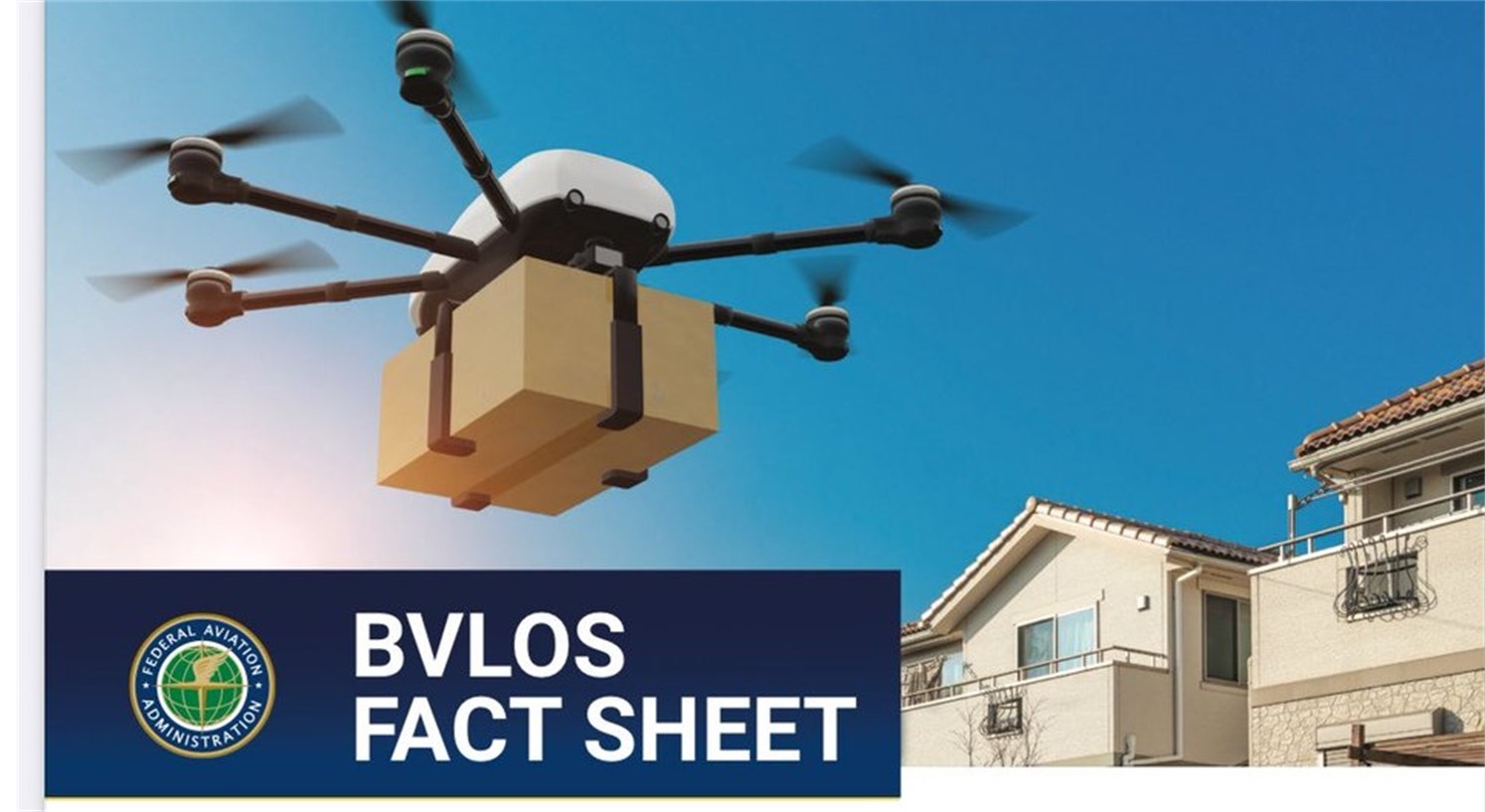
Rather than issuing approvals one flight at a time, the proposed rule envisions a scalable, rule-based system in which qualified operators can conduct BVLOS missions within defined airspace and safety parameters. Flights would generally occur below 400 feet above ground level, and operators would have to document communication coverage, procedures for lost-link scenarios, and boundaries of operation. They would also assess airspace hazards, consult Notices to Air Missions (“NOTAMs”), and coordinate with other users of the national airspace system (“NAS”).
A central innovation is the creation of Automated Data Service Providers (“ADSPs”)—entities that would manage real-time data on airspace use, detect-and-avoid systems, and safe separation between drones and crewed aircraft. Drones would be required to yield to aircraft broadcasting via ADS-B and avoid airports, heliports, and emerging eVTOL sites. The proposal would further allow certain drones, including those weighing up to roughly 1,300 pounds with payload, to operate under consensus-based design standards rather than full FAA type certification. This reflects the same performance-oriented philosophy seen in MOSAIC, i.e., setting measurable safety targets, then allowing technology to determine how to meet them.
The FAA’s proposal also establishes a tiered oversight structure. Lower-risk operations—such as routine inspections or agricultural mapping—would require a permit, while complex or higher-volume operations would require a full operating certificate supported by a safety-management system. Each certificated operator would appoint an operations supervisor, responsible for compliance and safety, and a flight coordinator, managing real-time activities. These roles do not require traditional pilot certification, underscoring the shift from an individual-pilot model to one emphasizing organizational accountability.
The BVLOS proposal devotes considerable attention to data integrity and security, mandating physical and cybersecurity protections, maintenance logs, and prompt reporting of anomalies or property damage. In regulatory terms, this marks a transition from visual oversight to data oversight: safety depends on whether the system as a whole can prove it operated safely, not whether a human could see the aircraft.
The potential legal consequences are substantial. Liability may shift from individual operators to organizations, software developers, and data-service providers whose systems manage airspace separation. Insurance coverage will have to evolve to address risks of system failure, cybersecurity breaches, or data corruption, none of which fit neatly within existing aviation-liability models. Regulatory counsel will be navigating a hybrid regime that blends aviation safety, telecommunications, and information-security law. And federal-state tensions over privacy and local drone restrictions will continue to test the boundaries of FAA preemption as low-altitude operations expand into populated areas.
Final Thoughts
MOSAIC and BVLOS illustrate the FAA’s ongoing shift from prescriptive regulation to performance-based oversight. Both depend on measurable safety outcomes, continuous data collection, and shared accountability between the agency and the industries and people it regulates. They also demonstrate how new technologies—whether more capable personal aircraft or autonomous drones—are reshaping traditional legal frameworks for certification, liability, and insurance.
As MOSAIC and BVLOS take effect, lawyers, insurers, and operators will be interpreting not just the rules, but the relationships those rules create among people, machines, and data. In that sense, the law reflects a central tenet of aviation—that safety and innovation share the same airspace, and that the key to both lies in understanding the literal letters of the law as well as its spirit.
About Timothy M. Ravich

Timothy M. Ravich concentrates his practice in the areas of aviation, product, and general civil litigation. Recognized as one of only 50 lawyers qualified as a Board-Certified Expert in the area of aviation law, Tim focuses on traditional areas of aviation litigation, including product liability and airline defense, and pioneering areas such as unmanned aerial vehicles (drones) and advanced air mobility. Click here to read Tim’s full attorney biography.