
California’s New AI Law: A Fence Post Against a Flood
In June 2023, a federal court in New York issued a decision that would become a defining example of why many attorneys were hesitant to embrace artificial intelligence (“AI”) in the legal profession. In Mata v. Avianca, Inc., 678 F. Supp. 3d 443 (S.D.N.Y. 2023), attorneys drafted and submitted a brief to the court. Opposing counsel soon reported that it could not locate several of the decisions cited in the brief. When the court looked into the matter, it became clear that the problem was not a misquoted holding or an incorrect citation; the cases themselves did not exist. The attorneys ultimately admitted that ChatGPT had been used to supplement their research and that they had never taken the most basic step expected of every first-year associate: independently verifying that the authorities they cited were real.
Although the court imposed only $5,000 in sanctions, the case gained notoriety far beyond what the sanction might suggest. For many attorneys already skeptical of emerging technology, Mata became the embodiment of their concerns: that lawyers would begin relying on AI as a substitute for the research, diligence, and independent judgment fundamental to practicing law. Notably, the attorney at the center of Mata was not a junior associate, but a lawyer with more than 30 years of experience.
Mata was not an isolated incident. In Noland v. Land of the Free, L.P. (2025) 114 Cal.App.5th 426, the California Court of Appeal sanctioned an attorney $10,000 after finding his appellate briefs filled with fabricated quotations and citations generated by AI and forwarded the opinion to the State Bar. This June, in LNU v. Blanche, No. 24-4790 (9th Cir. June 3, 2026), the Ninth Circuit went further. Two attorneys filed briefs containing nonexistent cases and misattributed quotations, then repeatedly told the court the errors were typographical mistakes and denied that AI had been involved. The court fined each attorney $2,500, suspended both from practice before the Ninth Circuit for six months, and sent its order to the State Bar.
California’s Response: SB 574
On September 30, 2026, Governor Newsom signed Senate Bill 574, making California the first state to regulate attorneys’ use of generative AI by statute. Effective January 1, 2027, the law adds Business and Professions Code section 6068.1, which prohibits attorneys from delegating the practice of law to generative AI, requires them to take reasonable steps to verify AI output and correct fabricated content, and imposes confidentiality safeguards. It also amends Code of Civil Procedure section 128.7 to require that the attorney responsible for a pleading personally verify every citation, whether or not AI supplied it.
The law further requires attorneys to “[d]isclose the use of generative artificial intelligence to the court for all documents submitted to the court.” (Bus. & Prof. Code, § 6068.1, subd. (a)(3)(C).) The statute does not say how much AI involvement triggers disclosure or what form the disclosure must take. Even the California Lawyers Association’s analysis of the law observes that, read literally, the provision could reach any use of generative AI connected to a filing, a result the Legislature likely did not intend given how common AI use among attorneys has already become.
The legislation is helpful. Verification, independent judgment, and confidentiality are exactly the right priorities. But the disclosure requirement is a fence post put up to stop a flood.
The Flood Is Already Here
The disclosure requirement assumes that using AI is a discrete choice: an attorney opens ChatGPT, asks for a brief, and blindly files what comes back. That attorney exists, and Mata, Noland, and LNU show what happens when the work goes unchecked. But that singular model of AI use is disappearing fast. Generative AI is already built into legal research platforms, word processors, and document review tools. Even a basic Google search often opens with an AI-generated summary. Does an attorney who reads one while drafting a brief owe the court a disclosure?
Consider two 100-page motions. The first was generated entirely by an AI program and filed without meaningful review. The second was researched and written by an attorney, who then ran it through a word processor that used AI to tighten sentences and clean up formatting. Those documents present completely different risks. Read literally, the statute may require the same disclosure for both.
The problem compounds as firms move to new document management, case management, and e-filing systems. These platforms increasingly come with generative AI built in, summarizing documents, suggesting classifications, and assembling filing materials whether or not anyone asks. When a firm upgrades its software, does every document that passes through the new system become “AI-assisted”? No one would equate that with a brief fully written by AI, yet the statute does not draw a line between them.
And no one knows what AI will become. Even SB 574 recognizes the technology is a moving target, directing the Judicial Council to revisit its standard on courts’ use of generative AI as the technology develops. But nothing in the statute provides a similar mechanism for the attorney disclosure requirement. If AI ends up in virtually every piece of software attorneys use, and that appears to be where things are headed, a disclosure attached to every filing tells the court nothing. It becomes boilerplate, the legal equivalent of a cookie banner.
What Actually Holds the Line
None of this is meant to fault the Legislature, and frankly, there is not much more it could do. Lawmakers cannot regulate the technology fast enough to keep up with it. What they can do, and what SB 574 largely does, is restate the duties that never depended on technology in the first place.
That is the real lesson of Mata, Noland, and LNU. In none of those cases was the problem that AI was used. The Ninth Circuit made this explicit, stating that it was not sanctioning the attorneys simply because they or their staff used generative AI, and that “however legal technology develops, our procedural and ethical rules apply with equal force.” The problem was that attorneys signed and filed work they had not checked. Courts were already able to punish that conduct under existing rules, and they did. SB 574’s citation requirement largely codifies what the Court of Appeal had already held in Noland.
The Ninth Circuit’s order in LNU also shows what a meaningful disclosure requirement looks like. For the next two years, every attorney at the sanctioned firm must state in each filing, under penalty of perjury, whether generative AI was used and certify that every citation has been personally verified. A targeted disclosure imposed on attorneys who have already shown they cannot be trusted to check their work tells a court something. A blanket disclosure attached to nearly every filing in the state does not.
As blanket disclosure loses its meaning, the system will rely almost entirely on attorney accountability, and the consequences of failing that test are growing more serious. Mata ended with a $5,000 fine. Noland added a referral to the State Bar. In LNU, the Ninth Circuit ordered the attorneys to explain why they should not be disbarred from practice before the court and ultimately suspended them. For an attorney who files fabricated authority and then compounds the problem with a lack of candor, the risk to his or her license is real.
That is the safeguard that will still be standing after the flood. AI will keep changing how legal documents are produced, and no disclosure rule will keep pace. What will not change is that an attorney’s signature certifies the work, and an attorney who stops verifying that work is putting his or her license on the line.
About Trevor J. Spade
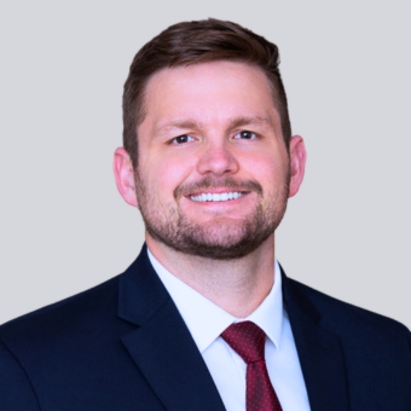
Trevor J. Spade is an associate attorney in Tressler’s Insurance Services Practice Group. Trevor focuses his practice on insurance coverage analysis and related litigation, advising domestic and international insurers on complex, high-exposure matters. He has experience with a variety of policy types, including errors and omissions, directors and officers, general liability, municipal liability, and property damage claims. He regularly evaluates coverage applicability, exclusions, and potential exposure, and drafts coverage opinions, reservations, and denial letters. Click here to read Trevor’s full attorney biography.