
City of Riverside v. RLI Insurance Company and How It May Procedurally Alter Insurance Coverage Disputes

For decades, California courts have carefully managed how civil liability litigation and related insurance coverage disputes proceed to avoid jury prejudice, discovery conflicts, and interference with an insured’s defense. Courts traditionally required coverage disputes to be litigated separately – and usually after the conclusion of the underlying liability action. Courts routinely dismissed insurers from active liability cases through demurrers or misjoinder motions when they were named in the same action as their insureds.
However, a recent decision from the Fourth District Court of Appeal, City of Riverside v. RLI Insurance Company, may significantly alter California’s insurance coverage defense landscape. City of Riverside reevaluates how – and when – an insurer may be joined in active litigation when an additional insured alleges a wrongful denial of coverage, even while the injured third‑party plaintiff’s claims remain pending in that same action.
In the past, courts relied on the general rule first articulated by the California Supreme Court in Royal Globe Ins. Co. v. Superior Court 23 Cal.3d 880 (1979) that a “plaintiff may not sue both the insurer and the insured in the same lawsuit.” Royal Globe was rooted in the same concerns addressed by Cal. Evid. Code § 1155, which prohibits the use of liability insurance evidence to prove negligence or wrongdoing. Courts feared that allowing insurers to remain named parties in active liability actions would alert juries to the existence of insurance coverage, which could be viewed as proof of the insured’s negligence or wrongdoing. Courts also expressed concern that discovery directed at insurers – such as requests for claims files, coverage evaluations, and settlement analyses – could “seriously hamper” the insured’s defense.
Those concerns were reaffirmed in Moradi‑Shalal v. Fireman’s Fund Ins. Cos. 46 Cal.3d 287 (1988), where the Supreme Court reiterated that joinder of insurers in pending liability cases risked violating Cal. Evid. Code § 1155. The Court noted joinder of insurers in their insureds’ liability cases would create an inherent conflict of interest, as insurers “must not only protect the interests of its insured, but also safeguard its own interest from the adverse claims of third-party claims.” Id. at 302. Both Royal Globe and Moradi‑Shalal concerned claims brought by injured third‑party plaintiffs directly against an insurer pursuant to Cal. Ins. Code § 790.03(h) rather than an insured asserting the insurer breached its contractual rights under the policy.
In the City of Riverside, the Court, presented with a different procedural posture, reached a different conclusion as to the maintenance of a coverage dispute inside a pending liability case. There, surviving family members of a pedestrian killed in a motor vehicle accident sued the City of Riverside (the “City”), among others, alleging a dangerous condition of public property. The City tendered its defense and indemnity of the action to its street-lighting consultant, Design Services, Inc. (“DSI”), and DSI’s insurer, RLI Insurance Company (“RLI”). City of Riverside v. RLI Ins. Co., (2026) 119 Cal. App. 5th 405, 408. RLI disclaimed any duty to defend or indemnify the City, asserting that the City was not an additional insured under DSI’s policy.
The City then filed a cross‑complaint against DSI and RLI in the underlying liability action brought by the family, alleging that it was an additional insured under DSI’s policy and that RLI wrongfully denied its defense and indemnity. The City asserted claims for indemnification, apportionment of fault, declaratory relief, breach of contract, and bad faith. Id. at 408.
RLI demurred, asserting that it could not be joined in the same action as its insured while the liability case remained pending. Id. at 408-409. The trial court agreed and sustained RLI’s demurrer without leave to amend. On appeal, the City argued that it was not a third‑party claimant, but an additional insured in contractual privity with RLI, asserting first‑party contractual claims, not tort claims, primarily relying on Royal Surplus Lines Ins. Co. v. Ranger Ins. Co. 100 Cal.App.4th 193 (2002). Id. at 409. In Royal Surplus, the Court departed from the general rule espoused in Royal Globe, prohibiting joinder of an insurer, and held that an insurer may be joined in the underlying liability case where an additional insured sued both the insured and the insurer for failure to defend and indemnify. Royal Surplus, 100 Cal.App.4th at 200.
Relying on Royal Surplus, the City of Riverside court reversed the trial court’s ruling, finding that by naming the City as an additional insured, RLI created an independent contractual obligation to the City and that the City had standing to sue RLI directly. City of Riverside, 119 Cal. App. 5th at 415. Because the City was an additional insured, it was a “first‑party” claimant with direct contractual rights under the policy, and was therefore permitted to bring its action against RLI and DSI for breach of contract and bad‑faith denial claims. Id.
The City of Riverside court further explained that concerns regarding jury prejudice or discovery conflicts could be addressed through bifurcation or severance, rather than dismissal. The Court rejected the insurer’s argument that discovery directed at coverage issues would create conflicts with the insured’s defense, explaining that where the claims against the insurer are contractual in nature – such as disputes over policy interpretation or an insurer’s duty to defend – the insurance policy would be at issue and would have to be produced to establish the existence of a contractual relationship. Under those circumstances, trial courts have the inherent authority to manage discovery and control the order of proceedings.
The City of Riverside clarifies that an additional insured asserting contractual and bad‑faith claims may be permitted to litigate those claims concurrently – and in the same action – as the underlying liability claim, even while the injured third‑party plaintiff remains in the case. While Cal. Evid. Code § 1155 and traditional prejudice concerns remain an issue, the City of Riverside signals that those concerns may be addressed through the court’s case management procedures rather than outright dismissals.
Royal Globe and Moradi-Shalal involved injured third-party claimants seeking to join insurers in tort-based actions against insured defendants. By contrast, Royal Surplus – and now City of Riverside – address claims asserted by additional insureds seeking to enforce contractual coverage rights in connection with the underlying liability litigation. In light of the City of Riverside, insureds and additional insureds may increasingly rely on the Royal Surplus line of cases to pursue their coverage disputes concurrently within a pending underlying liability case, rather than waiting for its final resolution. Insurers, in contrast, are likely to continue invoking Royal Globe and Moradi-Shalal, which address concerns regarding jury prejudice under Cal. Evid. Code § 1155 and the potential conflict of interest arising when an insurer must protect both the interests of its insured and safeguard its own interest from the adverse claims of a third-party claimant.
How the City of Riverside will be treated and whether it creates a broad procedural shift in coverage litigation remains to be seen. What is clear, however, is that the long‑standing practice of resolving underlying liability issues first and only then resolving coverage disputes is no longer guaranteed where an additional insured asserts its contractual rights against an insurer.
About Erfan Samsam Shariat
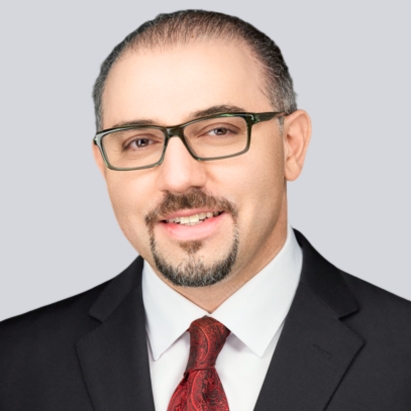
Erfan Samsam Shariat is an associate in Tressler’s Insurance Services Practice Group in our Orange County, California office. Erfan concentrates his practice on claims handling and extracontractual liability, insurance consulting, and insurance litigation. Click here to read Erfan’s full attorney biography.