
Parks and Wreck: Local Park District Absolved of Any Liability from Plaintiff’s Fall Under Premises Liability Theory
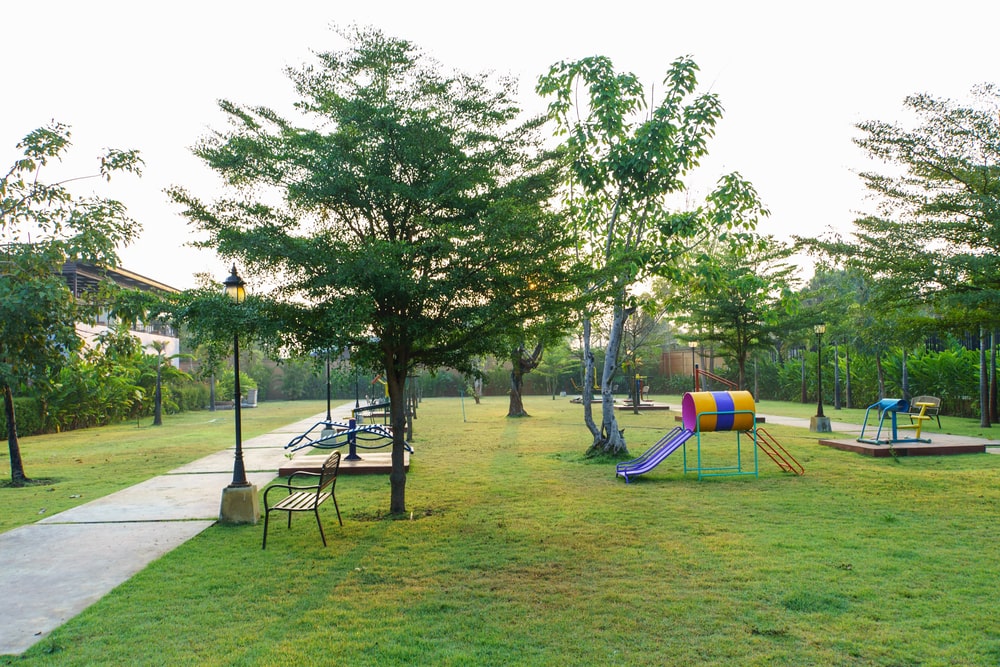
The Illinois Court of Appeals recently affirmed the district court’s grant of summary judgment in a case concerning premise liability for public entities. Wright v. Gurnee Park District, 2025 IL App. (2d) 240687. Amanda Wright was playing badminton with her family on a parcel of public park land that abutted her brother’s property. Ms. Wright tripped on a stump that had been overgrown by grass, and broke her left wrist. In the ensuing lawsuit, the district court granted summary judgment in favor of the park district. Specifically, they found that Ms. Wright’s use of the property, playing badminton, exceeded the park’s permitted use. Further, the court noted that the stump was an open, obvious danger.
The court turned to the park’s own code of ordinances to determine the allowable uses of the park land. Specifically, those ordinances barred the erection of any temporary structures, and banned any organized sporting event without a permit. Because the erection and use of the badminton net was not allowed under the park ordinances, the court determined that Ms. Wright was not a permitted user of the property, and could not carry a premise liability claim. Further, the court found that the presence of the stump was an open and obvious danger; noting that any person would be aware to watch their footing in an unkempt, grassy area with tall grass, especially in light of a warning to “take care near the tall grass.” As such, the open and obvious doctrine precluded liability.
This decision emphasizes the importance of clear, well-crafted park ordinances. In the absence of evidence to the contrary, courts will often look to public entities’ own rules to determine the acceptable premise uses. There was no indication that the grassy area in the present case was intended to be used for anything besides normal green space. As such, the court turned to the park’s ordinances, which excluded the activity Ms. Wright was engaged in. Further, parks should be careful when removing trees from the premises. In the present case, the court found that the stump was large enough to still be obvious in the grass. The court noted that views of the area from every direction show that there was a tree-stump cut close to the ground. However, if that stump was cut even lower to the ground, or if it was in an area where it did not stand out as much, the obstacle would no longer be open and obvious. As such, public property owners should be mindful of how obvious anything they leave behind may be.
For more information about this article, please contact Alexander T. Myers at amyers@tresslerllp.com.

Alexander (Alex) T. Myers serves as an associate in Tressler’s Local Government and Litigation Practice Groups. His practice is primarily focused on civil rights litigation, tort litigation, employment litigation and counseling, matters arising from section 1983, and police misconduct. Alex’s legal background as a Deputy Attorney General for the Office of the Indiana Attorney General (OAG) encompassed numerous litigation topics across both state and federal courts. Click here to read Alexander’s full attorney bio.